Related services: custom Excel macro development · business process automation services
The Reporting Problem in Modern Organisations
Business reporting is one of the most critical functions within any enterprise. Executives, finance teams, operations managers, and department leaders rely on timely, accurate information to make informed decisions. Yet many New Zealand organisations continue to struggle with fragmented reporting processes, manual data preparation, inconsistent spreadsheets, and time-consuming report generation.
As organisations grow, reporting complexity increases. Data originates from ERP systems, accounting platforms, CRM solutions, databases, cloud applications, and operational systems. Bringing this information together manually often creates bottlenecks, introduces errors, and consumes valuable staff time. Automated spreadsheet solutions provide a practical and highly effective alternative. By combining Excel, VBA, Power Query, SQL connectivity, and workflow automation, businesses can transform reporting from a labour-intensive process into a reliable, scalable decision-support system.
What Automated Spreadsheet Reporting Looks Like
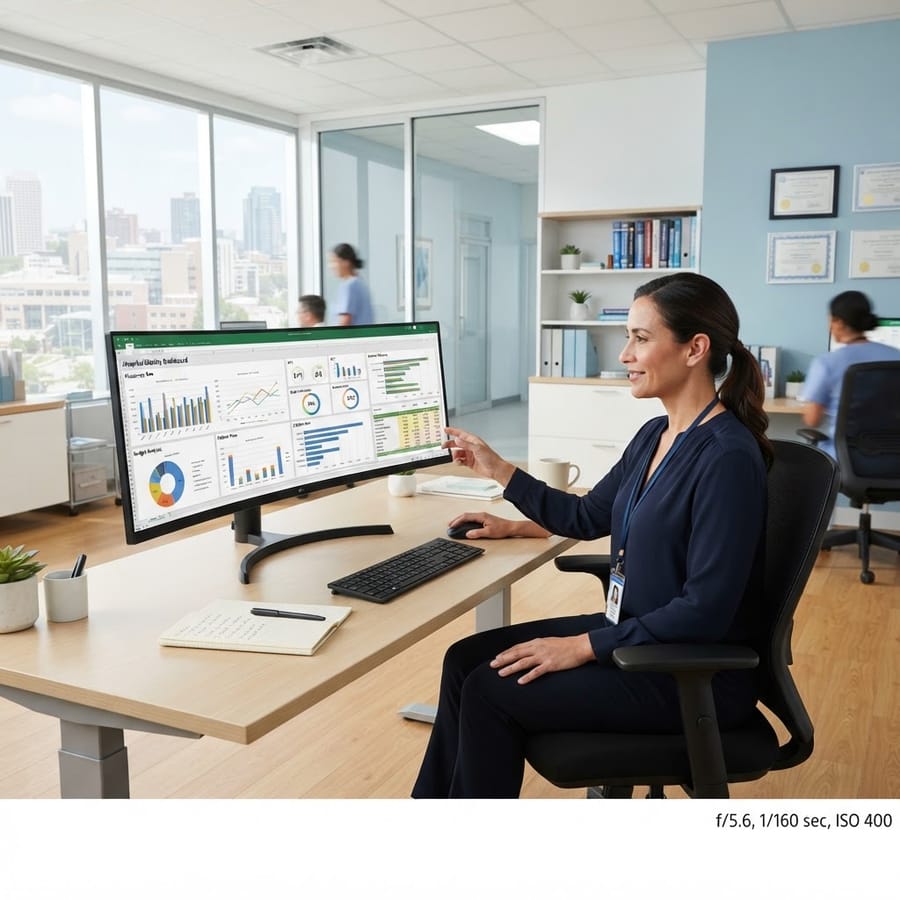
In a well-designed automated reporting environment, source data is imported from connected systems automatically — no manual exports, no copy-paste. Transformation and calculation logic runs without user intervention. Reports format themselves, apply the correct presentation standards, and in many cases distribute themselves to the right recipients by email. The only human involvement is reviewing and acting on the output.
Key Benefits for NZ Businesses
- Reports prepared in minutes rather than hours or days
- Consistent formatting and calculation methodology
- Reduced dependency on individual staff members
- Lower risk of manual errors entering the reporting process
- Faster access to management information
- Ability to run reports on demand rather than on a fixed schedule
- Improved confidence in the accuracy of reported numbers
From Fragmented to Integrated Reporting
Most businesses start with data in multiple places — different systems, different spreadsheets, different formats. The first step in building automated reporting is consolidating these sources into a structured data model that can be queried reliably. Power Query handles this connection and transformation layer, creating a clean, consistent data foundation that all reporting draws from.
The Role of VBA in Report Automation
Once the data foundation is in place, VBA handles the reporting logic — generating individual report sheets, applying formatting, creating charts, routing outputs to the right people, and triggering workflows. Together, Power Query and VBA create an end-to-end automated reporting pipeline that runs reliably every time.
Frequently Asked Questions
- How long does it take to automate an existing report?
- Simple reports with well-defined data sources can typically be automated in one to three days. Complex multi-source reports with distribution requirements may take one to two weeks.
- What happens if the source data format changes?
- Power Query transformations are designed to handle common format variations. We document the logic clearly so changes can be accommodated without specialist intervention in most cases.
- Can automated reports be scheduled to run without anyone opening Excel?
- Yes. Using Windows Task Scheduler with VBA, reports can be generated and distributed automatically on a schedule — daily, weekly, or at any interval required.
Conclusion
Automated spreadsheet reporting transforms one of the most time-consuming functions in a business into a reliable, consistent, low-effort process. For New Zealand organisations that currently spend significant time preparing the same reports repeatedly, automation delivers an immediate and sustained return. XLS Experts designs and builds automated reporting solutions tailored to the specific data sources, reporting requirements, and distribution needs of each client.