Related services: custom Excel spreadsheet development · management dashboard development
Introduction
Healthcare providers across New Zealand operate in an environment where accuracy, compliance, and efficiency are essential. Hospitals, medical centres, specialist clinics, aged care providers, laboratories, and community healthcare organisations all rely on timely reporting and accurate data to deliver quality patient care while meeting operational and regulatory requirements.
Although many organisations have invested in clinical management systems and enterprise software, Excel remains a critical business tool for operational reporting, financial analysis, workforce planning, procurement, and executive decision-making. However, unmanaged spreadsheets can introduce risks such as manual errors, inconsistent reporting, duplicated effort, and limited visibility across departments.
Professional Excel solutions developed by XLS Experts transform Excel into a governed business application. Through custom VBA development, Power Query automation, intelligent dashboards, and seamless integration with existing systems, healthcare providers can automate repetitive processes, improve reporting accuracy, and support better organisational decision-making.
Why Healthcare Organisations Continue to Depend on Excel
Healthcare organisations generate large volumes of operational data every day, including:
- Patient activity reports
- Staff rostering information
- Financial performance
- Procurement records
- Inventory and medical supplies
- Funding reports
- Quality assurance metrics
- Compliance documentation
- Clinical performance indicators
While enterprise healthcare platforms manage clinical workflows, many departments still rely on Excel for operational reporting because it offers flexibility, rapid analysis, and familiarity across teams. The challenge arises when spreadsheets become increasingly complex, manually maintained, and business critical.
Common Challenges Healthcare Providers Face
Many healthcare organisations experience similar operational issues:
Manual Reporting Takes Too Long
Staff spend hours every week collecting data from multiple systems, copying information into spreadsheets, checking formulas, and producing reports. This creates unnecessary administrative workload and delays management reporting.
Inconsistent Data Across Departments
Different teams often maintain separate spreadsheets using different formats and calculations. The result is conflicting information that reduces confidence in business reporting.
Increased Risk of Human Error
Manual data entry increases the likelihood of formula mistakes, incorrect patient statistics, duplicate records, version control issues, and missing information. Small spreadsheet errors can significantly impact financial reporting and operational planning.
Limited Visibility for Leadership
Executives require accurate dashboards showing key operational metrics. Without automated reporting, leadership often receives outdated information that limits informed decision-making.
How Custom Excel Solutions Solve These Problems
Professional Excel development transforms ordinary spreadsheets into structured business applications. Solutions can include:
Automated Reporting
Excel automatically retrieves information from multiple systems, refreshes reports, applies calculations, and generates management dashboards without manual intervention. Benefits include faster reporting, consistent calculations, reduced administration, and improved data accuracy.
Power Query Data Integration
Healthcare organisations often maintain information across multiple platforms. Power Query enables Excel to consolidate data from SQL databases, CSV exports, ERP systems, finance software, payroll systems, scheduling software, and inventory systems — rather than manually copying data between files.
Executive Dashboards
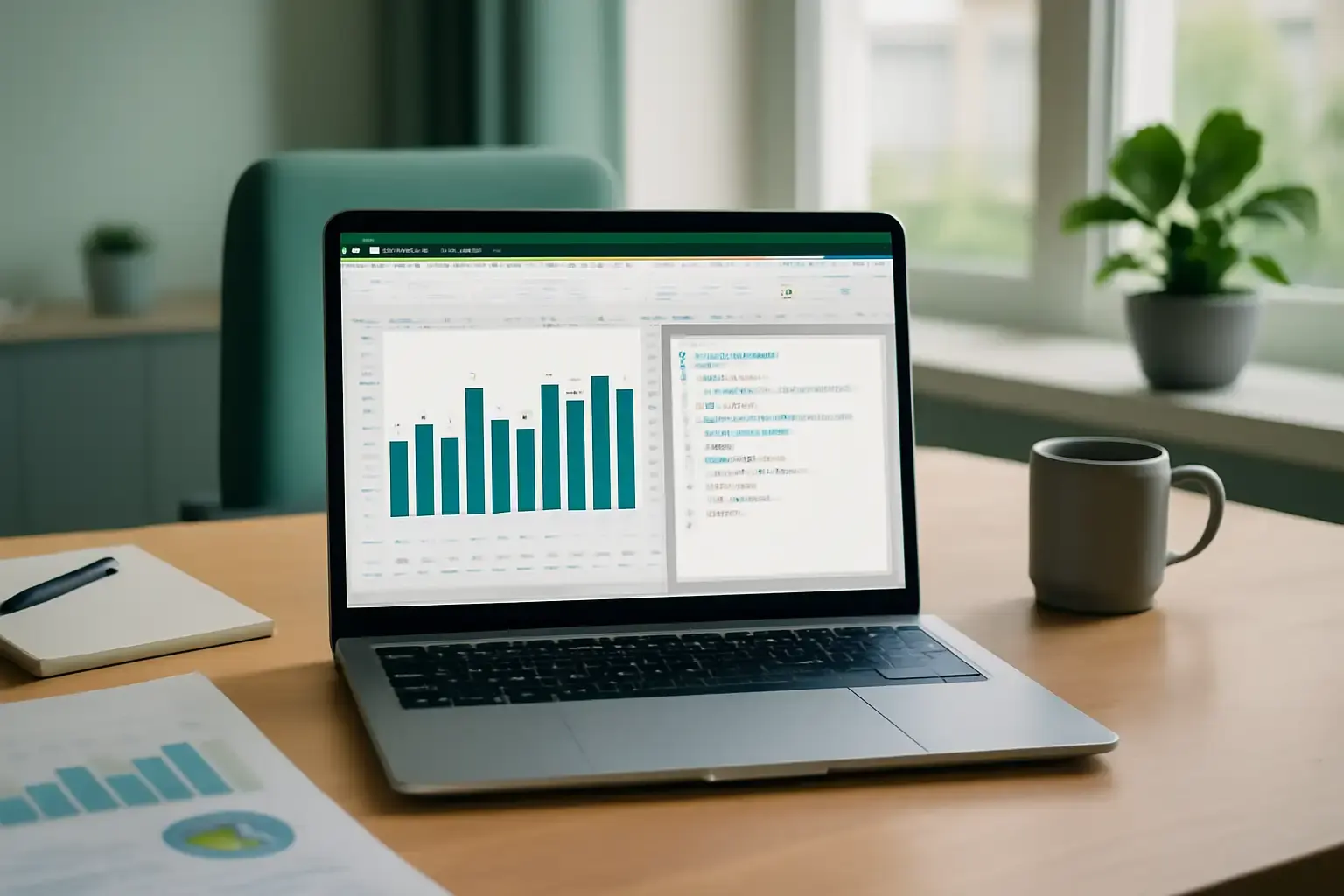
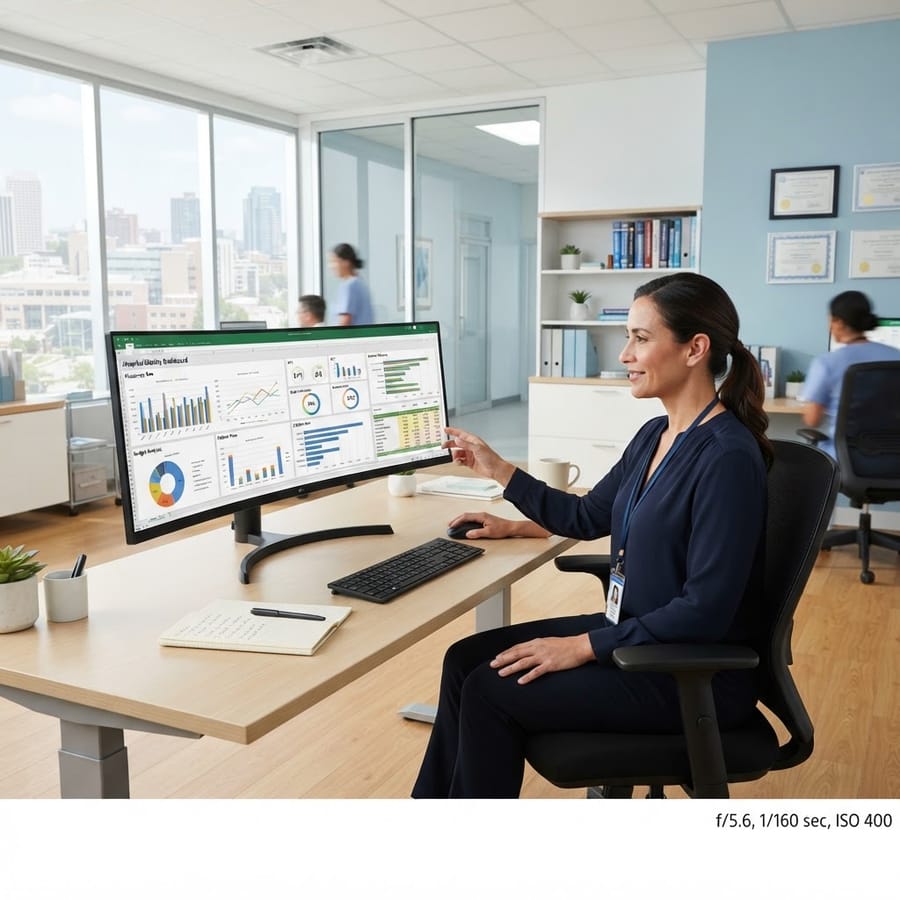
Decision-makers require clear visibility into operational performance. Interactive Excel dashboards provide insights into patient volumes, service utilisation, department performance, financial reporting, budget tracking, workforce allocation, procurement costs, and operational KPIs.
VBA Automation
Excel VBA removes repetitive manual tasks by automating business processes, including one-click reporting, automated email distribution, data validation, report generation, file consolidation, workflow approvals, document creation, and scheduled reporting.
How Excel Integrates with Existing Healthcare Systems
One of Excel's greatest strengths is its ability to complement — not replace — existing business systems. Custom Excel solutions can integrate with ERP platforms, financial management systems, payroll software, SQL databases, business intelligence platforms, inventory systems, procurement platforms, and government reporting datasets. Instead of investing in expensive software redevelopment, organisations can extend existing systems through intelligent Excel automation.
Business Benefits for Healthcare Providers
Healthcare organisations implementing professional Excel automation typically achieve improvements across several areas:
- Improved operational efficiency — automation reduces repetitive manual work
- Better reporting accuracy — standardised calculations reduce spreadsheet errors
- Faster decision-making — real-time dashboards provide immediate operational insights
- Reduced administrative costs — automation reduces labour-intensive reporting
- Better governance — version control, user permissions, validation rules, and documentation
Frequently Asked Questions
- Can Excel still be used in large healthcare organisations?
- Yes. Excel remains one of the most widely used business analysis tools in enterprise environments. When professionally developed, it becomes a reliable reporting and automation platform that complements existing healthcare systems.
- Is VBA suitable for enterprise healthcare reporting?
- Absolutely. Custom VBA applications automate repetitive reporting processes, improve consistency, reduce manual effort, and help organisations maintain standardised business processes.
- Can Excel connect to our existing systems?
- Yes. Professional Excel solutions can integrate with databases, ERP platforms, finance systems, cloud applications, APIs, and numerous other business platforms.
- When should healthcare providers consider custom Excel development?
- Organisations should consider professional Excel development when reporting consumes excessive staff time, manual errors occur regularly, multiple departments maintain separate spreadsheets, or executive reporting lacks consistency.
Conclusion
Healthcare providers across New Zealand require reporting solutions that are accurate, scalable, and capable of supporting informed decision-making. Professionally developed Excel applications, VBA automation, Power Query integration, and executive dashboards help eliminate manual workloads, improve governance, and deliver trusted operational insights. XLS Experts specialises in enterprise Excel development for organisations seeking to optimise reporting, automate business processes, and maximise the value of existing systems.